Saturday, 16 February 2013

SHADES OF GRAY


CELL 211


(CELDA 211)

2009
Director: Daniel Monzón


Cell 211 is the representation of a prison riot which keeps you in suspense throughout. In this intriguing blend of events induced either by destiny or by choice, a viewer remains interested and involved.   


This is not a classical black-and-white story. One cannot root for the good guys, because there is no good guys/bad guys division. Someone could assume that the ones behind the bars must be the bad ones, they are on the other side of the law, while the ones defending the law are automatically good ones. Not here. 


On the other hand, this film does not defend prisoners and does not represent them as innocent and oppressed. 
This movie and its director do not pick sides. The movie just makes us wonder about the society and the people society creates, and reminding us that it is difficult to find white in all those shades of gray.  


Sunday, 10 February 2013

EXPRESSIONISTIC EXPRESSION

M                               
1931
Director: Fritz Lang 


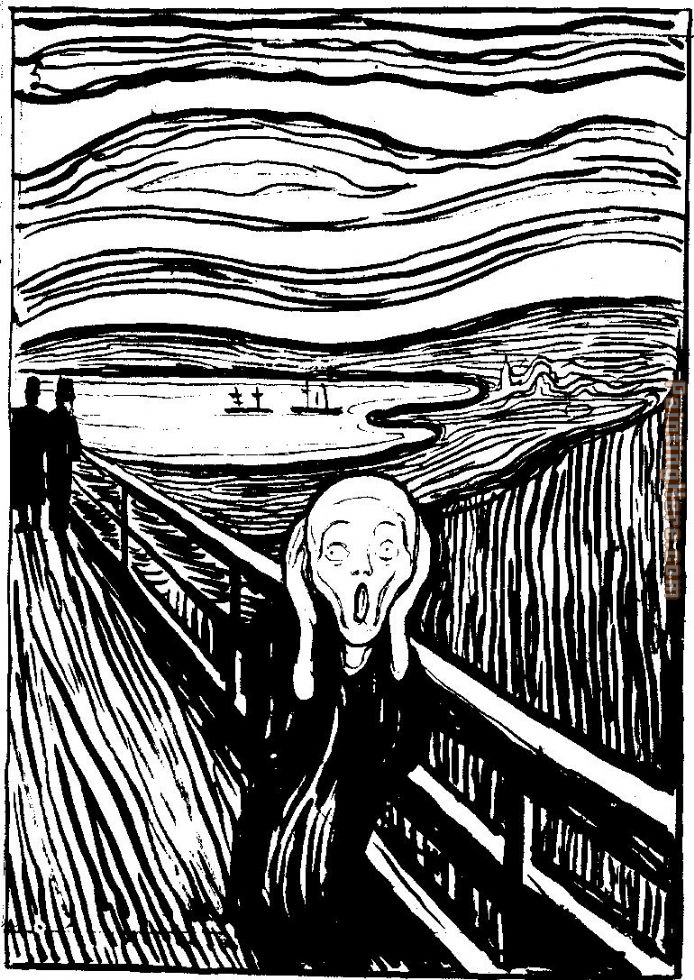
When hearing "expressionism" the first thing that comes to mind is Munch's The Scream, especially the black and white version. Fritz Lang's M is one restless, black&white scream.


Although key titles of German expressionism are silent movies such as The Cabinet of Dr. Caligari (1920), Nosferatu (1922), and Metropolis (1927) M is also a movie permeated with expressionistic elements. M is Lang's first sound movie in which the theme of a serial killer and the chase is brought trough different genres. The movie starts with a documentary representation of psychosis in the city, continues as a detective movie and ends as a drama. 

The film is based on a contrast between the underground world, the world of the criminals and the world above, the police. The director gives us an interesting comparison between these two worlds and using parallel editing he connects these world in their mutual goal, catching the murderer. Each group due to its own interests. 


Director uses shadows in representing the murderer, which is one of the elements of expressionism. Besides that, it is interesting how the murderer is introduced gradually, through sound, then shadows, from the back and finally his face in the mirror. 

Since M is Lang's first sound movie it is important to emphasize the interesting use of sound. Murderer's whistling is used in off-sound and therefore it makes a significant rhetorical device. Accordingly, what we do not see, but only hear, maintains the suspense, curiosity, as well as fear.


The movie M, with its use of sound, shadows and contrast and with what it chooses to show and what it decides to omit, evokes the feeling of anxiety and thus becomes expressionistic.  


Sunday, 3 February 2013

DEATH IN LIFE

WILD STRAWBERRIES
(Smultronstället)
1957
Director: Ingmar Bergman


In comparison to The Seventh Seal, this movie is more humanistic and earthly. Although the main character (Isak Borg) contemplates about the meaning of life, his thoughts are always in relation to worldly instances. 


As Isak realizes his death approaches he begins to review his personality, his behavior,  his relationships, that is, his life in general. Isak perceives his earlier existence as death in life: "...that I'm dead although I'm alive."  His embittered, cold, isolated life dis-enabled this doctor and professor to experience fullness of living. 


However, throughout the movie, the optimistic touch interweaves through the image of a young girl and her friendship with Isak.  
The movie also ends optimistically. Professor Isak suggests to his helper Agda to call him by his name. Although she wittily refuses ("I'm sorry! Are you ill?"), this suggests Isak's willingness to alter his cold demeanor and isolated subsistence. Isak decided to live. 


Wednesday, 30 January 2013

GENUINE BROTHERHOOD


CHILDREN OF HEAVEN
(Bacheha-Ye aseman)
1997
Director: Majid Majidi


This story is so sad yet essentially beautiful in its presentation of children's lives.  The story of two siblings cooperating and sharing a pair of shoes brings out true values. Childlike and heartwarming innocence of its main characters impersonates authentic virtue and simplicity.


This movie teaches us two things: you don't have to use special effects, hire famous actors or work in an enormous Hollywood studio to make a great movie and you don't need to have much to be truly happy, to be human, to build a world of goodness. This movie will restore your faith in humanity.

Sunday, 27 January 2013

DYSFUNCTIONALITY AT ITS BEST


Dogtooth 
(Kynodontas)
2009

Director: Giorgos Lanthimos


This somewhat disturbing dark comedy will keep you in anticipation and wonder-struck throughout. 

The story is about three youngsters who live with their parents in complete isolation and in fear of the outside world. 
While watching any scene one must constantly question the motives of characters actions. A viewer manages to comprehend and put the puzzle pieces together, but remains astonished and shocked.


A viewer incessantly reviews the reasons why these parents decided to raise their children in this way. The answer can be derived from a father's sentence addressed to Christine, a woman who became a disturbance to their lives: "I hope your kids have bad influences and develop bad personalities. I wish this with all my heart." A viewer can conclude that he wishes to provide his children only with good stimuli in order to become good people. What he considers good, of course. This makes this movie a true example of the proverb: "The road to hell is paved with good intentions." These children truly live in hell of ignorance leading to sociopathy. 


Thursday, 24 January 2013

A FUNNY DEMYSTIFICATION

DJANGO UNCHAINED: KKK scene


If KKK masks ever made you feel unpleasant this Monty Python-like scene will make your fear or restlessness go away. 


Tarantino presented these fear sowing people as simple, dullish, lowbrow characters. Without facial expressions, but with dull appearance thanks to their bags, with their accent and body language these characters will make you laugh until you cry.


This is probably one of the funniest scenes in the movie and it perfectly demystifies the obscure enigma of the Klan. Their sinister ideas are reduced to low-minded issues in a funniest way possible.


Wednesday, 23 January 2013

THE FIDELITY OF ADAPTATION


WUTHERING HEIGHTS

            
What makes a ‘good adaptation’? Is it the rigorous following of plot, faithful representation of characters’ personality and physiognomy or something else?
According to its dictionary meaning “to adapt” is to adjust, to alter, to make suitable. When considering this definition it is necessary to remark that an adaptation is not a copy of the already existing work (in another medium). Adaptation is a creative process; some might even say that it is more difficult to adapt a scenario than to produce one. 
Because of the time limit, film must exclude much of the content, nevertheless, has to grasp the atmosphere.
I will try to clarify whether the directors of two adaptations of Emily Bronte’s Wuthering Heights (William Wyler’s [1939] version and Peter Kosminsky’s [1992] version) succeeded in creating a ‘good adaptation’. I will try to discuss on the matter of three kinds of fidelity when adaptation is concerned: the fidelity of plot, the fidelity of characters, and the fidelity of, what will be named, ‘soul’.


FIDELITY OF PLOT

The fidelity of the plot or the narrative is something that every book reader and movie viewer notices first. It is more than obvious that a student who wants to avoid reading Wuthering Heights and watches Wyler’s movie instead will most probably fail the exam. The Wyler’s movie, in fact, covers only half of the book, and even the covered half is not without deficiencies (Hindley’s wife does not give birth, neither does Catherine). As it is stated in the The Encyclopedia of Novels into Film: “The William Wyler adaptation of Wuthering Heights captures much of the romantic aura of the novel while leaving much of the plot and the more disturbing imagery behind.”[1]
On the other hand, Kosminsky’s version covers the entire novel, the first and the second generation of characters, both the romantic and the villainous side of Heathcliff.
The viewer can judge the quality of the movie simply by the degree of fidelity concerning the plot. The more faithful the plot is the better the movie is. Is this criterion just, in this case at least? According to my opinion, and according to the ratings on Internet Movie Database and Rotten Tomatoes, this can hardly be the righteous and the sole criterion. Namely, the 1939 movie’s ratings are much higher than the ratings of the 1992 movie.
Manifestly, there is something else that makes a good adaptation. I will try to investigate what that is, whether it is the fidelity of characters or the fidelity of “soul”.


 FIDELITY OF CHARACTERS

 Do directors of the two adaptations of Wuthering Heights succeed in transferring rhetorical and aesthetic effects through Heathcliff’s character?
The recognition of Wyler’s Heathcliff is valid, as well as the one of Kosminsky. The viewer is successfully presented with the character in both movies. Wyler’s Heatcliff is completely aligned with his version of the novel. He presents a tragical love story and represents Heathcliff as a victim of unjust an inhumane class structure. While Wyler represents Heathcliff as a 'Byronic romantic lead' “Kosminsky and scriptwriter Anne Devlin imply that none of the other adaptations had the courage to reflect in full Heathcliff’s villainy as Brontë displayed it in the second half of the novel. This is surely a valuable principle on which to base their adaptation, not because of its fidelity, but because of the attempt to break away from the partial, sentimental readings of the novel of the previous sixty years. Sadly, Kosminsky’s film is only this, failing to simply tell the story with an adequate rhythm and enough clarity.”[2] Wyler obviously failed in providing the viewer with allegiance; most probably he did not even want to represent Heathcliff faithfully. On the other side, Kosminsky tried to achieve allegiance. However, it is nearly impossible to present all Heatcliff’s mood changes in such a short period which is required for a movie, at least in my opinion.
Considering all of the above, if we are to judge which adaptation is better according to the fidelity of characters, excluding the quality of actors’ performances, we will have to say that both adaptations failed.


FIDELITY OF “SOUL”

The author of The Theory of Adaption asks what exactly constitutes that transferred and transmuted “content” and provides the reader with notions of the ‘spirit’, ‘tone’, ‘style’ ‘the story’.[3] In the notion of “soul” I will include Hutcheon’s ideas as well as symbols and themes covered in the novel.
Hutcheon also states that “Themes are perhaps the easiest story elements to see as adaptable across media and even genres framing contexts.”[4] This is true, and in transferring themes both adaptation pretty much succeed. Themes such as love, destructiveness of love, and the problem of social class are present in both movies.In presenting the motifs of moors, symbolism of windows and the overall tone of the book and the atmosphere Wyler’s movie are much more successful. Kosminsky’s moors seem too artificial and the attempt to transfer the symbolism of windows, which is very prominent in the novel, seems futile.


Wyler interpreted the novel as a tragic love story and presented Heathcliff as a romantic Byronic figure and a victim of fatal love while Kosminsky decided to include the diabolical and abysmal aspect of the novel. Even though Wyler’s version can be characterized as a ‘better’ movie it can hardly be described as a successful adaptation because, as stated in the Encyclopedia the film resembles more of a “variation on a theme from Emily Brontë than a full adaptation of the novel." [5]


[1, 5] Tibbetts, J. C. , James, M. W. The Encyclopedia of Novels into Film. New York: Fact on File inc., 2005.
[2] Martin, S. What does Heathcliff Look Like? Performance in Peter Kosminsky’s Version of Emily Brontë’s Wuthering Heights, in: Books in Motion: Adaptation, Intertextuality, Authorship, Amsterdam: Rodopi, 2005.
[3,4] Hutcheon, L. A Theory of Adaptation. New York: Routledge Taylor & francis Group, 2006.