Sunday, 2 March 2014

IS THERE HOPE FOR APSURDISTAN?


Semiotic analysis of Apsurdistan's coat of arms


The cover of Dubioza Kolektiv's album represents the coat of arms of the country of Apsurdistan. This country does not necessarily represent a geographical area but a mental and a social state, although band members base their lyrics on the situation in Bosnia and Herzegovina. The picture depicts all the problems encountered in this country described in songs, not only on this particular album, but on several other ones. 

The use of different motifs and juxtaposing seemingly opposite symbols represent the absurd of the country where most of the people live. In this short analysis I will try to give certain explanations of symbols and motifs used in the coat of arms.

At the very top of the emblem there are two symbols. Hammer and sickle and EU stars. One representing the former system and the other representing the present or the future one. Apparently opposite systems seem to co-exist in Apsurdistan, and even though both have their good and bad sides it seems that Apsurdistan somehow picks up only the bad ones. 

Four religious symbols represent the groups people usually place themselves. People feel the necesity to belong to a certain group, and religion is one of the criteria. The absurd occurs when the members of one religious group, or one ethic group, have the feeling of superiority over others. Equally important absurd is the one when the differences between the groups, usually based on stereotypes or tradition, become emphasised when the stress should be on the unity of people who share the same environment and problems. One Dubioza's verse perfectly connects these religious symbols with the fork and the knife: "Just keep praying for your religions, it  doesn't matter if you have anything in your fridge or not." (trans: I.M.)

The two rifles placed next to the fork and knife represent the everyday life in Apsurdistan, easily described as the powder keg.
One of the rifles is pointed to the hummingbird. A bird which is usually a figure of peace and love.

Sheep and an ostrich. Both, obviously, represent people of Apsurdistan. Sheep, animals that are easily manipulated with, and even if they get wings they do not stand a chance. Ostrich, an animal which, it was believed, bury its head in sand to avoid danger. Even though this myth is proved wrong, the metaphor is still there. People of Apsurdistan bury their head, play dumb, but in this way they expose their whole body.

A football. A football stands for the old Latin phrase: Panem et circences. The superficiality of Apsurdistan people presented easily through this symbol depicts another issue. People will be happy if you give them bread and games, but the inhabitants of Apsurdistan often lack the bread part. 


At the bottom of the emblem two plants are juxtaposed. Ivy and canabis. The latter one usually sybolises fight against the repressive system and revolution while ivy is considered to be the symbol of friendship and eternal life. Ivy also climbs towards the sun. Both plants can represent the power of growth and can give hope for people of Apsurdistan. People should fight, think and strive. Use their minds and have souls! That's the only way to reach the light.



Wednesday, 25 December 2013

"THANKS FOR THE WINGS"


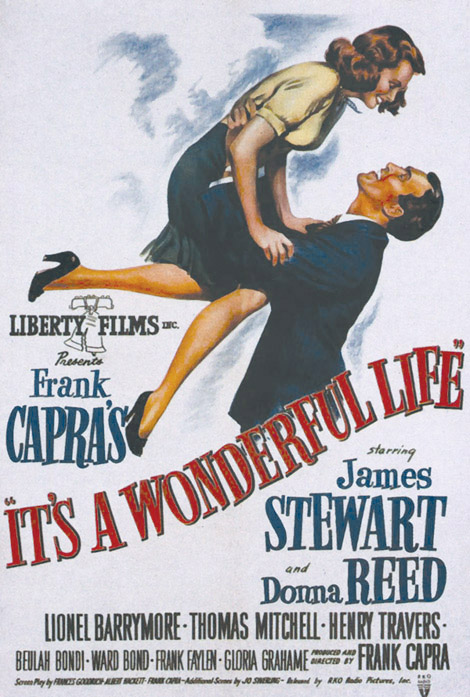
It's a Wonderful life

(1946)

Director: Frank Capra


Capra was a populist, and the simplicity of his narrative structures created a mythical America of simple archetypes who; with their wit, humor and casualness; evoke emotions in every viewer. Big social problems are represented through scripts in which an every-man, the man next door, fights the corrupt political bosses, mean industrialists and social villains in general. Capra was an immigrant who fought for his place in the film industry by believing that the movie can evoke passion and emotion of the workers, he wanted the newdeal-audience to like him and his movies. He usually moralized about political and economical problems but he always personalized those issues and associated them with a single everyman. Although these social problems were presented through one man; this was Capra's way of engaging the viewer and making the viewer identify with the character. This is how the issue was transferred from one man to the collective and this is what gave the issue a broader social dimension. 


In the film It's a Wonderful Life happy ending is enabled only with the interference of the supernatural which implies the doubt and the impossibility of the individual to keep the independence and one's own will in the society. That is why the protagonist of the movie (George Bailey) fits in the profile of a melancholic hero, the one who wishes to fulfill his dreams, but he is helpless from all the commitments, obligations and situations. This conflict leads the protagonist on the edge of committing suicide and supernatural motifs enable Capra to reveal the dark representation of a province as a peak of alterations between optimism and desperation that shape the movie.

The director of the movie took the title from a Christmas card which perfectly depicts his sensitive and fantastic way of describing the simple courtesy and politeness of the American provincial society. The movie represents the inner struggle between protagonist's dreams and ideals and the situation around him, it is ably shown through close-ups. 


Although some can describe the movie as sentimental rubbish, I consider that the movie is actually a beautiful combination of lovable, funny scenes and the ones that are touching and melancholic, with a happy ending and a beautiful message of the importance of the everyman. This is also a very clever criticism of the society and political corruption.

It's a Wonderful life is a beautiful realization of the saying What goes around comes around (in a good way here) with a perfect inscription "Dear George, remember no man is a failure who has friends. Thanks for the wings, Love Clarence." 


Saturday, 12 October 2013

'TRAGEDY AND FIESTA'

SNOW WHITE

- BLANCANIEVES - 

(2006)

Director: Pablo Berger


Black. White. Silent. Fairy tale. Dwarfs. Bullfighters. All of this in one movie, Berger's Snow White. 


This beautiful and picturesque adaptation includes motifs and symbols from more than just fairy tale. Including different stories and myths and excluding language and dialogue the director made this movie universal. 

With people's faces, expressions, eyes and carefully selected music the director manages to evoke emotions without uttering a single word. 


Every fairy tale is based on the contrast between good and evil, so is this one. In director's words: "The contrast of black and white movie simply represents the contrast between darkness and light, love and hate, good and evil, tragedy and fiesta."


TOO LUCKY?

MATCH POINT

(2005)

Director: Woody Allen


The man who said "I'd rather be lucky than good" saw deeply into life. People are afraid to face how great a part of life is dependent on luck. It's scary to think so much is out of one's control. There are moments in a match when the ball hits the top of the net, and for a split second, it can either go forward or fall back. With a little luck, it goes forward, and you win. Or maybe it doesn't, and you lose.

These are the opening lines of Allen's movie of luck and guilt, movie of passion, temptation and  obsession as the movie poster says itself. Lines spoken by the protagonist Chris, a character who changes from a self-confident but likable person to a cold opportunist. These lines illustrate the main topic of the movie. Being lucky rather than being good. The motif of the ball hitting the top of the net becomes the key motif in the movie giving an intriguing twist towards the end of the movie. 


Being lucky instead of being good is how the protagonist, or the antagonist, perceives life. "You have to learn to push the guilt under the rug and move on, otherwise it overwhelms you." These words illustrate how he works, he manages to push the guilt under the rug with luck on his side. When the ball/ring falls on his side the viewer must ask Isn't he a bit too lucky?

Sunday, 26 May 2013

INCEPTION - BEFORE IT WAS COOL


THE DISCREET CHARM OF THE BOURGEOISIE


Le Charme Discret de la Bourgeoisie

(1972)


Director: Louis Buñuel


This surrealist social satire focuses both on its content as well as its form. 

The movie mocks the social habits of the bourgeoisie. Their special way of sipping martini and their false social graces. It presents us with a funny scene where a fancy coffee place runs out of coffee, tea and milk, and doesn't serve alcohol.
It displays the hypocrisy of the high society which deals enormous amounts of cocaine but abhors the sight of marijuana.

They consider themselves the ones with proper social graces while some of them have love affairs with another person from their group.

The movie doesn't stop there. It mocks the church, the police, the military, the diplomacy...

All of these contents are presented in an oneiric atmosphere. Dreams intertwined with more dreams all of which make the protagonists uncomfortable and all connected with the scene of the group walking in the middle of nowhere probably heading nowhere. 


Sunday, 14 April 2013

"...CREATED OUT OF INK, PAPER AND IMAGINATION"


RUBY SPARKS


Directed By: Jonathan Dayton , Valerie Faris


(2012)


Cute and magical romantic comedy about a young writer Calvin and his creation Ruby Sparks. 

Although this movie comes down to two quotes; which are 
commonly used when talking about love and relationships - that they almost become cliches; it is still one charming and disarming love story. 

"If you love something, set it free. If it comes back, it is yours. If it doesn’t, it never was." 

Calvin tries to shape his perfect partner, but every time he does that his love goes to another extreme. When she acts differently from his expectations Calvin changes Ruby and molds her into his perception of an ideal. He fails every time. He doesn't manage to put her in a cage of his concept of a perfect woman. He sets her free, he does not try to control his destiny any more, and destiny returns him a favor. 


"We come to love not by finding a perfect person, but by learning to see an imperfect person perfectly."
The movie brings a message of true love as a relationship where both sides embrace the other person completely, with his/her imperfections and differences between the sides.

Friday, 29 March 2013

GROWN-UP-KIDS' KINGDOM

MOONRISE KINGDOM 

(2012)

Director: Wes Anderson


Moonrise Kingdom, a film about love and revolt is based on the contrast between two worlds and their clash. The world of adults and the world of children. 


Adults in this movie are the antagonists. Not because of their viciousness or ill-temper, but because of their incapability. A scout master loses his scouts; parents are completely incompetent when considering the upbringing of their children. 

On the other hand, children are clever and adroit. Even though one can question the correctness of their actions, most of the times it seems that kids know better than the ones who should be their role-models. The thing that makes us laugh is how these kids embody adulthood and childhood in such an overwhelming and charming way. 


Diverting story, exceptional imagery, enjoyable atmosphere of the movie and lovable innocence of main characters keep a smile on viewer's face throughout. 

Wednesday, 13 March 2013

FIGHTING ABSURDITY

BRAZIL

(1985)

Director: Terry Gilliam


To criticize the society of today, or the one of 1985, is not easy. It has always been difficult to  accentuate flaws of the society. Authors of written observations about the world and its defects, usually use the same trick to avoid assaults. They travel in time. They either place events in the past, or in the future. Terry Gilliam chose the latter one. 

Gilliam's Brazil exquisitely distinguishes terrible shortcomings of the society giving emphasis on timeless stupidity and extremely ineffective bureaucracy.


BUREAUCRACY

"This is your receipt for your husband... and this is my receipt for your receipt."

The plot of the movie is focused on a highly inefficient and ultimately dangerous bureaucratic system and it effects on people. The plot is concentrated around the event where a simple and rather stupid mistake ruins several and fundamentally changes some lives. The world of Brazil is the one where money is spent on ministries which are end in itself, where every home device is automatic but nothing really works, where guards are dressed like SS troops and people are just numbers. 

THE IDIOCY OF SNOBBERY 

"There's been a little complication with my complication."

The stupidity and falsity of high society is perfectly depicted through protagonist's (Sam Lowry) mother and her cosmetic surgeries. The peak of stupidity is the celebration of her latest operation.
The same is skilfully represented in the dinner scene. The dinner is held in a supposedly luxurious restaurant where  all allegedly fine meals are just swills. Just like the people who go there. 


FANTASIES

The movie is intertwined with protagonist's fantasies about a lady of his dreams. He tries to rescue her, his captive princess. On the way he fights giant samurai, 'zombie-hunchback-children', freaks. All of these represent different officials, SWAT team, and other problems which he encounters. 


TUTTLE THE RENEGADE

Archibald Harry Tuttle, apostatized heating engineer, helps the protagonist and impersonates the other side of the society. The ones which fight against the stupidity of bureaucracy. Tuttle is represented as an 'Air Condition Batman', an outcast, fighting for the right cause and always leaving theatrically. 


 The world of Brazil is a combination of Kafka's Trial, Orwell's 1984, and, sadly, our reality.

Sunday, 3 March 2013

TASTE OF LIFE AND DEATH

TASTE OF CHERRY

(Ta'm e guilass)
1997

Director:Abbas Kiarostami


The story of a man (Mr. Badii) searching his associate in suicide. Although the theme revolves around death, the most impressive moments are the ones concerning the celebration and appreciation of life.


 "If you look at the four seasons, each season brings fruit. In summer, there's fruit, in autumn, too. Winter brings different fruit and spring, too. No mother can fill her fridge with such a variety of fruit for her children. No mother can do as much for her children as God does for His creatures. You want to refuse all that? You want to give it all up? You want to give up the taste of cherries? 

This is a part of Mr. Bagheri's monologue held in Mr. Badii's car. Mr. Bagheri is the one who agrees to help Badii in his intention, because he really needs the money. Although another person's life depends on that money, Mr. Bagheri still wants to persuade Badii to keep on with his life. That life is something worth of keeping. 


A spectator might assume that this beautiful metaphor of richness and diversity of life will talk Mr. Badii out of his intentions. Viewer might think that Mr. Bagheri will convince him that there are always reasons to live and carry on. 

However, Mr. Badii is not convinced, he proceeds with his intentions and lays in his prepared grave. This is the penultimate scene in the movie. 

The movie ends oddly, to a certain extent. The movie ends with a meta-cinematic scene: film crew on the set making this movie. By using this scene, the director wants to remind the spectator that this is still just a movie. He probably wants to distant the viewer and himself from the protagonist because he does not want for anyone to identify with Mr. Badii. 


The director cannot approve Mr. Badii's decision, because approving suicide would imply supporting it, which is not commendable. On the other hand, he lets him do it which implies  the director's respect of Mr. Badii's choice. 


Tuesday, 19 February 2013

BOY AND THE BEAST

LIFE OF PI

(2012)

Director: Ang Lee


This movie is philosophically and aesthetically beautiful. Through magnificent computer generated imagery it gives us a hiper-realistic simulacrum of the world and presents us with the incredible coexistence of faith, intellect and instinct.


"Faith is a house with many rooms. But no room for doubt? 
Oh plenty, on every floor. Doubt is useful, it keeps faith a living thing. After all, you cannot know the strength of your faith until it is tested."


Life of Pi is abundant in inspirational quotes, is somewhat upsetting, also very moving and still exquisitely witty. 

It gives the viewer a contrast as well as merging of two sides existing in any human. Two opposite sides enabling each other's existence. Our vegetarian and our carnivorous side. The one contemplating about ideas and ideals and the one fighting for survival. The one that gives strength and the one that gives faith, and the importance of one embracing the other.


"Above all: don't lose hope."

Saturday, 16 February 2013

SHADES OF GRAY


CELL 211


(CELDA 211)

2009
Director: Daniel Monzón


Cell 211 is the representation of a prison riot which keeps you in suspense throughout. In this intriguing blend of events induced either by destiny or by choice, a viewer remains interested and involved.   


This is not a classical black-and-white story. One cannot root for the good guys, because there is no good guys/bad guys division. Someone could assume that the ones behind the bars must be the bad ones, they are on the other side of the law, while the ones defending the law are automatically good ones. Not here. 


On the other hand, this film does not defend prisoners and does not represent them as innocent and oppressed. 
This movie and its director do not pick sides. The movie just makes us wonder about the society and the people society creates, and reminding us that it is difficult to find white in all those shades of gray.  


Sunday, 10 February 2013

EXPRESSIONISTIC EXPRESSION

M                               
1931
Director: Fritz Lang 


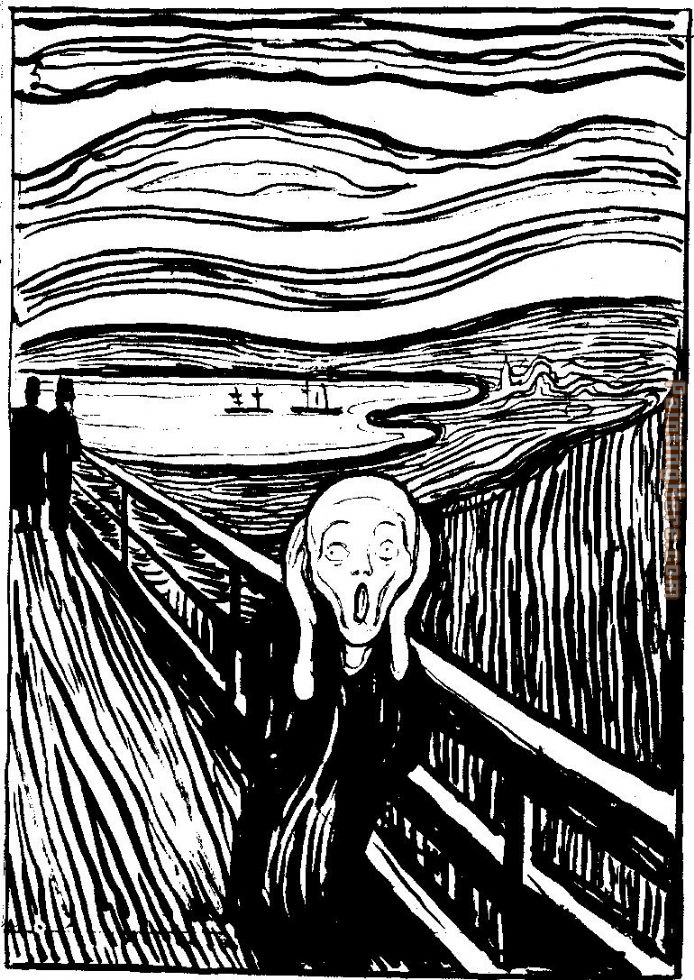
When hearing "expressionism" the first thing that comes to mind is Munch's The Scream, especially the black and white version. Fritz Lang's M is one restless, black&white scream.


Although key titles of German expressionism are silent movies such as The Cabinet of Dr. Caligari (1920), Nosferatu (1922), and Metropolis (1927) M is also a movie permeated with expressionistic elements. M is Lang's first sound movie in which the theme of a serial killer and the chase is brought trough different genres. The movie starts with a documentary representation of psychosis in the city, continues as a detective movie and ends as a drama. 

The film is based on a contrast between the underground world, the world of the criminals and the world above, the police. The director gives us an interesting comparison between these two worlds and using parallel editing he connects these world in their mutual goal, catching the murderer. Each group due to its own interests. 


Director uses shadows in representing the murderer, which is one of the elements of expressionism. Besides that, it is interesting how the murderer is introduced gradually, through sound, then shadows, from the back and finally his face in the mirror. 

Since M is Lang's first sound movie it is important to emphasize the interesting use of sound. Murderer's whistling is used in off-sound and therefore it makes a significant rhetorical device. Accordingly, what we do not see, but only hear, maintains the suspense, curiosity, as well as fear.


The movie M, with its use of sound, shadows and contrast and with what it chooses to show and what it decides to omit, evokes the feeling of anxiety and thus becomes expressionistic.  


Sunday, 3 February 2013

DEATH IN LIFE

WILD STRAWBERRIES
(Smultronstället)
1957
Director: Ingmar Bergman


In comparison to The Seventh Seal, this movie is more humanistic and earthly. Although the main character (Isak Borg) contemplates about the meaning of life, his thoughts are always in relation to worldly instances. 


As Isak realizes his death approaches he begins to review his personality, his behavior,  his relationships, that is, his life in general. Isak perceives his earlier existence as death in life: "...that I'm dead although I'm alive."  His embittered, cold, isolated life dis-enabled this doctor and professor to experience fullness of living. 


However, throughout the movie, the optimistic touch interweaves through the image of a young girl and her friendship with Isak.  
The movie also ends optimistically. Professor Isak suggests to his helper Agda to call him by his name. Although she wittily refuses ("I'm sorry! Are you ill?"), this suggests Isak's willingness to alter his cold demeanor and isolated subsistence. Isak decided to live. 


Wednesday, 30 January 2013

GENUINE BROTHERHOOD


CHILDREN OF HEAVEN
(Bacheha-Ye aseman)
1997
Director: Majid Majidi


This story is so sad yet essentially beautiful in its presentation of children's lives.  The story of two siblings cooperating and sharing a pair of shoes brings out true values. Childlike and heartwarming innocence of its main characters impersonates authentic virtue and simplicity.


This movie teaches us two things: you don't have to use special effects, hire famous actors or work in an enormous Hollywood studio to make a great movie and you don't need to have much to be truly happy, to be human, to build a world of goodness. This movie will restore your faith in humanity.

Sunday, 27 January 2013

DYSFUNCTIONALITY AT ITS BEST


Dogtooth 
(Kynodontas)
2009

Director: Giorgos Lanthimos


This somewhat disturbing dark comedy will keep you in anticipation and wonder-struck throughout. 

The story is about three youngsters who live with their parents in complete isolation and in fear of the outside world. 
While watching any scene one must constantly question the motives of characters actions. A viewer manages to comprehend and put the puzzle pieces together, but remains astonished and shocked.


A viewer incessantly reviews the reasons why these parents decided to raise their children in this way. The answer can be derived from a father's sentence addressed to Christine, a woman who became a disturbance to their lives: "I hope your kids have bad influences and develop bad personalities. I wish this with all my heart." A viewer can conclude that he wishes to provide his children only with good stimuli in order to become good people. What he considers good, of course. This makes this movie a true example of the proverb: "The road to hell is paved with good intentions." These children truly live in hell of ignorance leading to sociopathy. 


Thursday, 24 January 2013

A FUNNY DEMYSTIFICATION

DJANGO UNCHAINED: KKK scene


If KKK masks ever made you feel unpleasant this Monty Python-like scene will make your fear or restlessness go away. 


Tarantino presented these fear sowing people as simple, dullish, lowbrow characters. Without facial expressions, but with dull appearance thanks to their bags, with their accent and body language these characters will make you laugh until you cry.


This is probably one of the funniest scenes in the movie and it perfectly demystifies the obscure enigma of the Klan. Their sinister ideas are reduced to low-minded issues in a funniest way possible.